Embarking on cultivating psilocybin mushrooms requires diligent research and understanding of evolving legal landscapes, as decriminalization efforts gain momentum across various states and cities.
Current Legal Landscape (as of 02/18/2026)
As of today, February 18th, 2026, the legal status of psilocybin mushrooms remains complex and varies significantly across the United States; While federally illegal under the Controlled Substances Act, classifying psilocybin and psilocin as Schedule I drugs, numerous state and local jurisdictions are challenging this classification.
Decriminalization efforts range from low-priority enforcement in cities like Oakland and Washington, D.C., to full statewide legalization, as seen in Oregon and Colorado. Colorado’s Prop 122 specifically decriminalizes personal use and cultivation. However, some counties within legal states have opted out of these programs. Generally, possession remains technically unlawful in decriminalized areas, but arrests are unlikely.
Federal Legality & Controlled Substances Act
At the federal level, the legal standing of psilocybin mushrooms is unequivocally prohibited. The Controlled Substances Act classifies both psilocybin and psilocin – the psychoactive compounds within these mushrooms – as Schedule I controlled substances. This designation signifies a high potential for abuse and currently, no accepted medical use, making their possession, cultivation, and distribution illegal nationwide.
Consequently, any product or object containing these compounds is also federally illegal. This federal prohibition creates a significant legal risk for individuals involved in any stage of mushroom cultivation, regardless of state or local laws. Penalties for violating the Controlled Substances Act can be severe, including substantial fines and lengthy prison sentences.
State & Local Decriminalization Efforts
Despite federal prohibition, a growing number of states and localities are challenging the status quo through decriminalization and legalization initiatives. These efforts range from low-priority enforcement policies, like those in Oakland and Washington, D.C., to full statewide legalization, as seen in Oregon and Colorado.
Decriminalization typically means possession remains technically illegal, but law enforcement prioritizes other offenses. Colorado’s Prop 122 decriminalized personal use and cultivation. However, some counties within legal states have opted out. It’s crucial to understand that laws are constantly evolving, requiring growers to stay informed about their specific jurisdiction’s regulations.
Understanding Psilocybin Mushrooms
Psilocybin and psilocin are the key psychoactive compounds, varying in potency across different mushroom species, influencing the overall experience for users.
Psilocybin & Psilocin: The Active Compounds
Psilocybin and psilocin are the primary psychoactive constituents within psychedelic mushrooms, responsible for their mind-altering effects. Psilocybin itself isn’t directly psychoactive; rather, it’s rapidly metabolized into psilocin upon ingestion. Psilocin then interacts with serotonin receptors in the brain, particularly the 5-HT2A receptor, leading to altered perception, mood changes, and visual or auditory hallucinations.
The concentration of these compounds varies significantly between different mushroom species and even within the same species, depending on factors like growing conditions and genetics. This variation directly impacts the potency and intensity of the psychedelic experience. Understanding these compounds is crucial for responsible cultivation and consumption, as dosage plays a vital role in the effects experienced.
Different Species of Magic Mushrooms
Numerous species of mushrooms contain psilocybin and psilocin, each exhibiting unique characteristics and potency levels. Psilocybe cubensis is arguably the most widely cultivated due to its ease of growth and relatively high yields. Other popular species include Psilocybe semilanceata (Liberty Caps), known for its potency, and Psilocybe cyanescens (Wavy Caps), often found in wood chips.
Identifying species accurately is paramount, as misidentification can lead to consuming toxic mushrooms; Growers often prioritize cubensis for its forgiving nature, while experienced cultivators may explore more challenging but rewarding species. Understanding the specific needs of each species is vital for successful cultivation.
Potency & Effects Variations
Psilocybin mushroom potency varies significantly based on species, genetics, and growing conditions. Factors like substrate composition, lighting, and environmental controls directly impact psilocybin and psilocin concentrations. Even within the same species, individual mushrooms can exhibit differing potency levels.
Effects are subjective and influenced by dosage, individual sensitivity, and set and setting. Lower doses typically induce euphoria and altered perception, while higher doses can lead to profound visual and spiritual experiences. Responsible consumption and careful dosage control are crucial for a safe and positive experience.
Setting Up Your Grow Environment
A dedicated, sterile space is paramount for success, demanding meticulous sanitation protocols and controlled conditions to prevent contamination and foster optimal mushroom development.
Choosing a Grow Space
Selecting the right grow space is a foundational step. Prioritize a small, easily sanitized room or a dedicated closet. Basements or spare bedrooms often work well, offering darkness and temperature control. Avoid areas with high foot traffic or potential disturbances. Crucially, the space must be easily cleanable – surfaces like concrete or tile are ideal, while carpets should be avoided due to their porous nature and contamination risk.
Consider airflow; some ventilation is necessary, but direct drafts should be avoided. Maintaining a stable temperature is also vital, generally between 65-75°F (18-24°C). Light control is essential, as mushrooms don’t require much light during colonization, and fruiting stages benefit from indirect illumination.
Sterilization & Sanitation Protocols
Maintaining a sterile environment is paramount to successful cultivation. Contamination from molds and bacteria is a cultivator’s biggest enemy. Sterilization refers to eliminating all microbial life, typically achieved with a pressure cooker for grains and substrates. Sanitation, conversely, reduces microbial load – essential for surfaces and tools.
Regularly disinfect your grow space with 70% isopropyl alcohol. Wear gloves, masks, and hairnets during all stages. Flame sterilize inoculation loops and scalpels. Proper handwashing is non-negotiable. A clean workspace minimizes the risk of introducing unwanted organisms, maximizing your yield and ensuring a healthy grow.
Essential Equipment Checklist
Successful cultivation demands specific tools. A pressure cooker is vital for sterilizing grains, ensuring a contaminant-free spawn. Glass jars, with self-healing injection ports, are needed for grain preparation. A still-air box (SAB) or laminar flow hood minimizes contamination during inoculation. Substrates like coco coir and vermiculite require mixing containers.
Isopropyl alcohol (70%) and disinfectant are crucial for sanitation. Gloves, masks, and a lighter or scalpel are necessary for sterile technique. A monotub or fruiting chamber provides a controlled environment. Finally, a reliable thermometer and hygrometer monitor temperature and humidity.
Cultivation Techniques
Choosing between spore syringes and liquid cultures impacts colonization speed. Grain spawn, prepared from rye or brown rice, fuels mushroom growth within a chosen substrate.
Spore Syringe vs. Liquid Culture
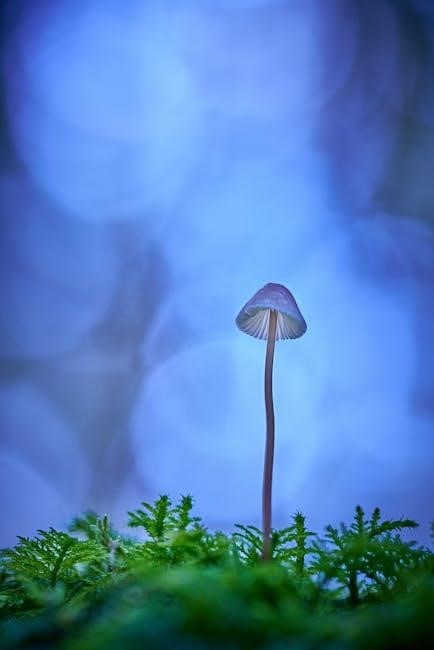
Spore syringes offer a cost-effective entry point for beginners, containing microscopic spores suspended in sterile water. They require careful inoculation onto a suitable substrate, like agar or grain, to initiate mycelial growth. However, syringes demand strict sterile technique to avoid contamination, as spores are less resilient than mycelium.
Liquid cultures (LCs), conversely, contain actively growing mycelium, providing a faster colonization rate and increased vigor. LCs are more forgiving regarding sterility, as the established mycelium can outcompete contaminants more effectively. Creating LCs involves transferring mycelium from a spore culture or tissue sample into a nutrient-rich liquid medium. While initially more involved, LCs offer a higher success rate and scalability for larger grows.
Grain Spawn Preparation (e.g., Rye, Brown Rice)
Grain spawn serves as the crucial intermediary step, bridging the gap between initial spore or liquid culture inoculation and bulk substrate colonization. Rye berries and brown rice are popular choices, offering excellent nutrient profiles for robust mycelial growth. Proper preparation is paramount; grains must be thoroughly rinsed, soaked for 12-24 hours, and then simmered until adequately hydrated but not mushy.
Following cooking, grains require sterilization, typically via pressure cooking for 90-120 minutes, ensuring complete elimination of competing microorganisms. Once cooled, sterilized grains are inoculated with mycelium from a spore syringe or liquid culture, initiating colonization. Maintaining sterile conditions throughout this process is vital to prevent contamination and ensure a healthy, vigorous spawn.
Substrate Selection & Preparation (e.g., Coco Coir, Vermiculite)
The substrate provides the nutritional foundation for mushroom fruiting, demanding careful selection and preparation. Coco coir, a coconut husk byproduct, and vermiculite, a mineral compound, are frequently combined for optimal water retention and aeration. This blend supports robust mycelial growth and subsequent pinning. Proper field capacity is crucial; the substrate should be moist but not saturated, allowing for gas exchange.
Pasteurization, rather than full sterilization, is often sufficient for coco coir/vermiculite mixtures. This involves hydrating the substrate and heating it to 160-180°F for 60-90 minutes, reducing competitor organisms without eliminating beneficial microbes. Thorough mixing ensures even moisture distribution, creating a consistent environment for colonization.
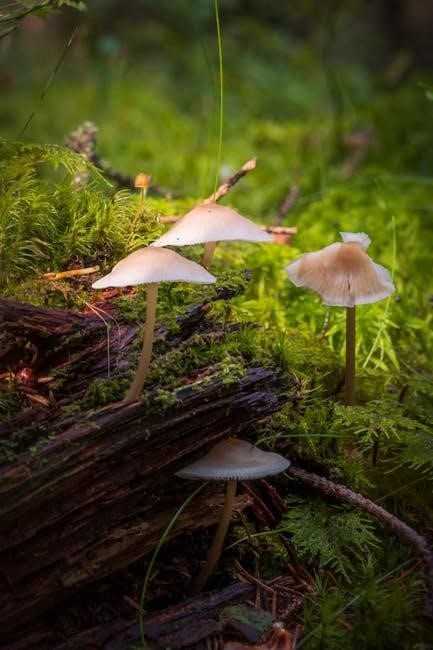
The Fruiting Chamber
Creating a controlled environment is vital; monotubs offer simplicity, while maintaining consistent humidity, airflow, and temperature triggers pin formation and mushroom development.
Building a Monotub
Constructing a monotub is a straightforward process, ideal for beginner cultivators. You’ll need a clear plastic tub with a lid, drill, polyfill, and optionally, a humidifier. Drill holes around the sides for airflow – approximately 2 inches apart – and smaller holes in the lid for filter patches. These patches, often made of micropore tape over polyfill, allow gas exchange while preventing contaminants from entering.
Line the inside of the lid with the polyfill to further filter the air. The tub itself should be thoroughly cleaned and sanitized before use. A properly built monotub provides a contained, humid environment crucial for successful fruiting, mimicking the natural conditions where psilocybin mushrooms thrive.
Maintaining Humidity & Airflow
Consistent humidity and adequate airflow are paramount during the fruiting stage. Aim for humidity levels between 90-95%, achievable through misting the monotub walls several times daily with distilled water. Avoid directly spraying the substrate or developing pins. Proper airflow prevents CO2 buildup, which can lead to leggy or deformed mushrooms.
Fresh air exchange (FAE) is crucial; the filter patches on your monotub provide this. Gentle fanning several times a day further enhances airflow. Monitoring humidity with a gauge is recommended. Balancing these two elements creates the optimal environment for robust mushroom development and plentiful yields.
Temperature Control
Maintaining a stable temperature is vital for successful mushroom fruiting. The ideal temperature range for most Psilocybe cubensis strains is between 70-75°F (21-24°C). Fluctuations can stress the mycelium, hindering development and potentially inviting contamination. Consistent temperatures promote healthy pinning and robust growth.
Heating mats can be used to maintain warmth, especially in cooler environments, but avoid direct contact with the monotub. Monitoring temperature with a thermometer is essential. Avoid placing the grow environment in direct sunlight or near drafts, as these can cause unwanted temperature swings, impacting your final yield.
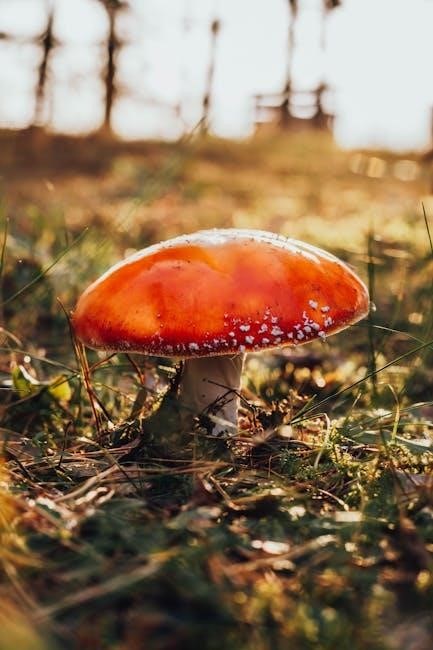
Harvesting & Drying
Carefully harvest mature mushrooms before spores drop, employing gentle twisting motions. Proper drying—using methods like fans or dehydrators—preserves potency and prevents degradation.
Identifying Mature Mushrooms
Recognizing the optimal harvest time is crucial for maximizing potency. Before harvesting, observe the veil—the membrane connecting the cap to the stem—for signs of breaking. A fully developed mushroom will exhibit a partially or fully opened cap, revealing gills underneath. These gills should display a dark, rich color, indicating spore maturity.
Avoid harvesting too early, as psilocybin content is still developing. Conversely, delaying harvest beyond peak maturity can lead to spore release, potentially diminishing the mushroom’s strength and creating a mess within the fruiting chamber. A gentle touch is key; mature mushrooms detach easily with a slight twist.
Proper Harvesting Techniques
Harvesting requires a gentle approach to avoid damaging the mycelium and subsequent flushes. Instead of pulling, grasp the base of the mushroom stem and gently twist and lift. This minimizes disruption to the substrate. Use a clean, sterile scalpel or knife to cut the mushroom at the base if twisting proves difficult, ensuring a clean break.
Avoid leaving stubs behind, as these can rot and introduce contaminants. Carefully inspect the surrounding area for “pins”—baby mushrooms—and avoid disturbing them. Proper harvesting encourages continued fruiting, maximizing your yield over multiple flushes.
Drying Methods for Optimal Preservation
Proper drying is crucial for preserving potency and preventing mold growth. The most common method involves using a food dehydrator at a low temperature (around 95-115°F or 35-46°C) for 6-12 hours, until brittle. Alternatively, a fan can be used, spreading mushrooms on a parchment-lined tray in a dark, well-ventilated room for several days.
Ensure complete dryness; any residual moisture leads to spoilage. Store dried mushrooms in airtight containers, like mason jars with silica gel packets, in a cool, dark place to maintain quality and extend shelf life.
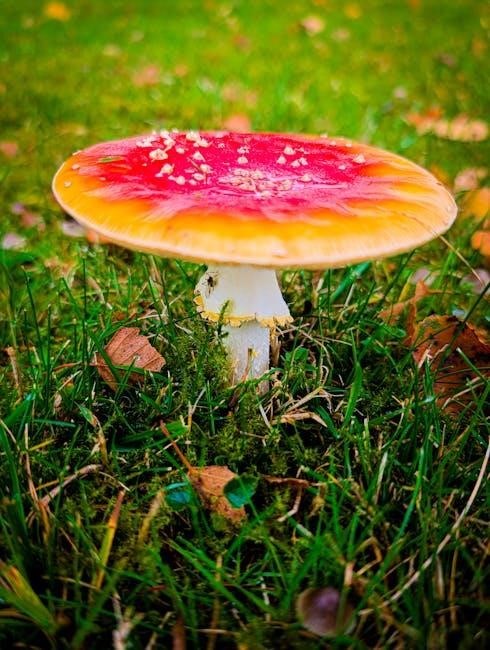
Legal Considerations & Risks
Cultivating psilocybin mushrooms carries significant legal risks, including felony charges and penalties, despite decriminalization trends in certain localities and states.
Penalties for Illegal Cultivation
The repercussions for illegal psilocybin mushroom cultivation are substantial and vary significantly depending on jurisdiction. Generally, growing mushrooms is considered manufacturing a controlled substance – psilocybin and psilocin – often classified as a felony. Federal law under the Controlled Substances Act imposes severe penalties, including lengthy prison sentences and hefty fines.
State-level penalties also differ; however, even in states with decriminalization efforts, cultivation often remains illegal. Consequences can range from misdemeanor charges with smaller fines to felony convictions carrying years of imprisonment. The quantity of mushrooms cultivated significantly impacts sentencing, with larger grows facing harsher penalties. It’s crucial to understand local laws, as enforcement priorities can shift.
Staying Informed About Changing Laws
The legal status of psilocybin mushrooms is rapidly evolving, demanding constant vigilance. Decriminalization and legalization initiatives are gaining traction nationwide, but laws vary dramatically between federal, state, and local levels. Regularly consult reputable sources – legal websites, news outlets covering drug policy, and organizations advocating for reform – to stay abreast of changes.
Understand that even within states with progressive policies, counties may opt-out, creating localized restrictions. Monitoring legislative updates and court decisions is vital. Ignoring these shifts could lead to unintended legal consequences, even if previously informed practices were considered acceptable.
Ethical Considerations
Cultivating psilocybin mushrooms carries significant ethical responsibilities beyond legal compliance. Consider the potential impact on individuals and communities. Responsible cultivation prioritizes harm reduction, advocating for safe usage practices and informed consent. Avoid contributing to the illicit market, which can fuel criminal activity and exploitation.
Respect the profound nature of these substances and their potential for therapeutic benefit, while acknowledging the risks. Prioritize education and transparency, discouraging irresponsible use. Engage in open dialogue about the ethical implications of psilocybin, fostering a culture of respect and mindful exploration.
Troubleshooting Common Issues
Addressing contamination, slow colonization, and pinning problems are crucial for successful grows; diligent sanitation, optimal conditions, and prompt intervention are key.
Contamination Prevention & Control
Maintaining a sterile environment is paramount in magic mushroom cultivation, as unwanted molds and bacteria can quickly ruin a grow. Thorough sterilization of all equipment – including grain jars, substrates, and the grow chamber – is essential. Utilize pressure cookers for grain and substrate sterilization, ensuring proper processing times.
Employ rigorous sanitation protocols, such as using isopropyl alcohol to wipe down surfaces and wearing gloves and masks during handling. Air filtration with HEPA filters can minimize airborne contaminants. Early detection of contamination is vital; discard any visibly moldy or discolored materials immediately to prevent spread. Proactive measures significantly reduce the risk of crop loss.
Slow Colonization
Experiencing delayed mycelial growth during colonization can be frustrating, but often stems from manageable issues. Insufficient substrate hydration is a common culprit; ensure proper moisture levels before inoculation. Suboptimal temperatures can also hinder growth – most strains prefer 75-80°F (24-27°C).
Verify grain spawn viability and consider supplementing the substrate with nutrients to boost colonization speed. Avoid over-inoculation, as it can lead to competition and slower spread. Patience is key, but if colonization stalls for an extended period, reassess conditions and consider potential contamination.
Pinning Problems
Difficulty initiating pinning – the formation of baby mushrooms – often indicates environmental imbalances. Insufficient fresh air exchange is a primary cause; stagnant air inhibits pin development. Maintaining high humidity (90-95%) is crucial, but avoid excessive moisture, which can lead to bacterial contamination.
Ensure proper lighting, even indirect, to signal the mycelium it’s time to fruit. Temperature fluctuations can also disrupt pinning; maintain a stable range. If pinning ceases abruptly, re-evaluate these factors and consider a light misting to encourage further development.
Resources & Further Learning
Explore online forums, recommended books, and reputable websites to deepen your knowledge, prioritizing safety and responsible cultivation practices for continued success.
Online Forums & Communities
Engaging with online forums and communities dedicated to mycology and psilocybin mushroom cultivation provides invaluable support and shared knowledge. Platforms like Shroomery.org are renowned for their extensive archives, detailed guides, and active user base, offering assistance with troubleshooting and technique refinement. Reddit’s r/shroomgrowing is another popular hub, fostering discussions on various cultivation methods and providing a space to ask questions.
Remember to exercise caution and verify information from multiple sources, as online advice can vary in accuracy. Prioritize communities that emphasize responsible cultivation, legal compliance, and harm reduction principles. These digital spaces are excellent for learning from experienced growers and staying updated on the latest advancements in the field.
Recommended Books & Websites
For comprehensive knowledge, “The Mushroom Cultivator” by Paul Stamets is a foundational text, detailing various cultivation techniques and mycology principles. Stamets’ “Psilocybin Mushrooms of the World” offers detailed species identification. Online, websites like FreshCap Mushrooms provide educational resources and cultivation supplies. Shroomery.org, as previously mentioned, boasts a vast library of articles and guides.
Additionally, explore resources from reputable mycological societies and universities. Always cross-reference information and prioritize sources with scientific backing. Be mindful of legal restrictions when accessing information related to psilocybin cultivation, ensuring compliance with local laws and regulations.
Safety Precautions
Maintaining a sterile environment is paramount to prevent contamination and ensure a successful grow. Always wear gloves, masks, and sanitize all equipment thoroughly. Proper ventilation is crucial when working with spores and substrates, minimizing inhalation risks. Be aware of potential allergic reactions to mushroom spores or substrate components.
Furthermore, exercise extreme discretion regarding legal ramifications. Never discuss your cultivation activities openly and secure your grow space to prevent unauthorized access. Prioritize responsible handling and storage of psilocybin mushrooms, adhering to all applicable laws and ethical considerations.